

Illustrations on this page are AI-generated concepts, not actual properties or listings.
You can be ready for a mortgage and still be unsure whether you are ready to buy. That hesitation deserves a closer look.
In Los Angeles and the San Fernando Valley, the decision reaches beyond the payment. It affects your commute, the cash you keep available, the work you take on and how easily you can change plans.
Buying may fit when the home works for your expected timeline and the full cost leaves room for the rest of your life. Renting may fit when flexibility matters more or buying would stretch your resources too far. Neither choice needs to be permanent.
Start with the questions below. The goal is to understand what would make a move work for you.
Jump to the question that matters most
How long will this home work for me?
What monthly payment can I comfortably carry?
How much savings should I keep after buying?
Does my income support the plan?
Am I ready for maintenance and HOA responsibilities?
What would I gain or give up by moving?
What should I do before deciding?

How long will this home work for me?
Think about the next chapter of your life, not just the next lease renewal. Could your work location change? Will you need another bedroom, fewer stairs or space for a home office? Are you still deciding which neighborhood feels right?
If you are new to Los Angeles, renting can give you time to experience the daily routine before committing to a purchase. A weekend visit to a neighborhood cannot show you everything about weekday traffic, parking or the trips you make most often.
Buying and selling involve transaction costs. An early move can make those costs harder to absorb, and a decline in value can complicate a sale. There is no universal number of years that makes buying the better choice. [1]
Ask yourself: if I needed to stay longer than planned, would this home still meet my needs? If the answer depends on a promotion, a quick renovation or a large price increase, revisit the plan with those assumptions removed.

What monthly payment can I comfortably carry?
Start with your actual spending. The amount a lender may approve and the amount you want to spend on housing answer different questions.
Build a monthly ownership budget that includes the loan payment, property taxes, homeowners insurance, any mortgage insurance, applicable HOA dues, utilities and upkeep. Allow room for savings and repairs as well. If taxes and insurance are included in an escrow payment, count them only once. [1, 2]
For renting, include rent, renters insurance, utilities, parking and any other recurring charges in your agreement. Compare homes with similar space, location and amenities. Otherwise, part of the apparent cost difference may reflect a different lifestyle.
For an LA County purchase, ask for a buyer-specific property-tax estimate and a plan for any supplemental bills. The county explains that reassessment can result in supplemental bills in addition to the annual bill, and these go to the owner even when there is a lender impound account. [3]
Get a property-specific insurance quote early rather than treating the seller’s premium or an online estimate as your own price. For a condo, confirm what the HOA covers before adding separate estimates for the same items.
A payment that works only in your best month deserves another look. Try a less comfortable scenario: a repair, a temporary income reduction or higher recurring expenses. What would you adjust, and how long could you manage?
For the deeper financial comparison, read Rent or Buy in Los Angeles? What the 5% Rule Can and Cannot Tell You. That article explains the cost shortcut and its limits. Here, the question is whether the entire housing plan fits your life.
How much savings should I keep after buying?
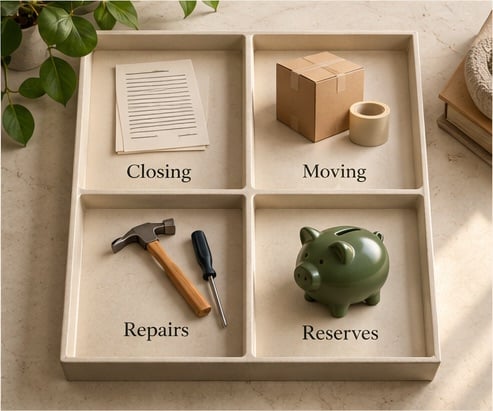
The down payment is only one use of your cash. Closing costs, moving, immediate repairs and your remaining reserves matter too.
You do not automatically need 20% down to buy. Loan requirements vary, and some programs allow a lower down payment. A smaller down payment can affect the payment, mortgage insurance and loan terms, so compare actual options with a qualified lender. [2]
Avoid choosing the largest down payment simply because it is available. The CFPB recommends accounting for other savings goals, closing costs and an emergency cushion before determining how much cash to put toward the purchase. [4]
Write down four separate amounts: cash needed to close, moving and initial setup costs, money for known property work, and the reserve you will keep afterward. A house that needs roof work and a condo with a disclosed assessment can create very different cash needs.
If family help is part of your plan, tell your lender whether the money is a gift or a loan before relying on it. Ask what documentation and repayment treatment apply. Do not assume borrowed funds will be treated like your own savings.

Does my income support the plan?
Review both the amount and the reliability of your income. If earnings vary, build your personal budget around a level you can reasonably sustain, rather than your strongest recent month.
Self-employment, contract work or seasonal income does not automatically mean you must keep renting. It does mean the financing conversation should happen early. The CFPB notes that self-employed borrowers and people with irregular or seasonal income may need more extensive documentation, with requirements depending on the lender and situation. [5]
Also review existing debt payments and the room they leave in your budget. Ask a qualified lender to compare your options before making a major financial change in preparation for a purchase.
The practical question is not whether your career looks like someone else’s. It is whether your documented income, obligations and reserves support the home you are considering.
Am I ready for maintenance and HOA responsibilities?
When something breaks, ownership means deciding how to address it and paying the costs that fall to you. Even a well-maintained home needs attention over time.
For a house, review inspection findings with the appropriate professionals and separate urgent work from improvements that can wait. Consider both money and time. A larger yard, aging systems or a project property can change how your weekends and savings are used.
For a condominium, review the association documents and financial information, what the dues include, and any disclosed assessments. An HOA changes how responsibilities are shared; it does not make ownership maintenance-free.
Renting can suit someone who prefers fewer direct property responsibilities. Review the actual lease and what the landlord handles, rather than assuming every rental offers the same arrangement.
Be honest about the work you want. A home can fit your budget and still ask for more attention than you want to give it.

What would I gain or give up by moving?
Put the ordinary week ahead of the impressive showing.
Imagine comparing a rental near your work in Studio City with a house farther west in the Valley. The house might offer space you value, while the rental might support a routine you prefer. This is a hypothetical tradeoff, not a claim about prices or commute times in either area.
Test the routes you would actually travel. Look at parking, access, outdoor space, noise and the way the rooms would function. Use the neighborhood guides to narrow your questions, then verify the details in person.
Age and relationship status do not decide when you should buy. Your priorities, resources and plans do. You can want the stability and control of ownership without forcing a purchase before the right fit is available.
If you are deciding between specific properties, Choosing Between Two Homes in Los Angeles can help you compare how each would work day to day.
What should I do before deciding?
Build a simple side-by-side plan using a realistic rental and a realistic purchase option. List the monthly costs, upfront cash, reserves, expected time in the home and the compromises each choice requires.
Mark each number as a quote, an estimate or an assumption. Then identify what still needs verification. A lender can address financing. An insurance professional can quote coverage. Inspectors and other qualified specialists can help you understand the property’s condition.
If buying looks comfortable, start a focused search. If it would leave you stretched or committed to a location you are unsure about, use the next rental period to resolve those specific issues. Waiting is more useful when you know what you are working toward.
If you are weighing a move in Los Angeles or the San Fernando Valley, I can help you compare the neighborhoods and property choices that fit your priorities. Bring your current housing costs, target areas and the changes you want your next home to make possible.
Call or text 818-355-2700, or contact Hooman to arrange a conversation. You can also start with the buyer’s guide.
Educational information only. This is not personalized financial, tax, legal, insurance or mortgage advice. Costs and eligibility depend on the property, financing and individual circumstances.
Hooman Morvarid, REALTOR® | Compass | California DRE 02192053 | 818-355-2700
Article sources
[1] CFPB: Financial considerations of buying a home
[2] CFPB: Ready to buy a home?
https://www.consumerfinance.gov/consumer-tools/mortgages/ready-to-buy-a-home/
[3] LA County Treasurer and Tax Collector: New Property Owner
https://ttc.lacounty.gov/new-property-owner/
[4] CFPB: Determine your down payment
https://www.consumerfinance.gov/owning-a-home/prepare/determine-your-down-payment/
[5] CFPB: Gather and update your paperwork
https://www.consumerfinance.gov/owning-a-home/explore/gather-and-update-your-paperwork/